
The Automation Gap: Why Networks Outpace the Organizations Running Them
By Frank McDermott, Carma Co-Founder
The need for network automation is rapidly outpacing what organizations can achieve. Because networks have scaled faster than the systems of record tracking them, inventory data often lags reality. And any automation built on lagging data fails.
Closing the gap starts with how inventory is captured, before any AI or orchestration layer is added.
Why Can't Inventory Systems Keep Up with Modern Networks?
Network and digital infrastructure has scaled rapidly. A standard fiber cable once held 144 fibers. Today, it's 1,728. That exponential growth is mirrored now in the scale of power—from megawatts to gigawatts.
And the impact on inventory management is becoming a serious problem. Every fiber has splices, assignments, and capacity states that must be tracked.
The once-standard spreadsheets and inventory tools simply cannot handle this scale.
The volume of records a modern build generates exceeds what manual processes can capture, and the gap compounds with every deployment.
What is Preventing Network Automation?
There are three key forces that are working against your ability to automate.
AI is an accelerant. AI demand pulls every capacity decision forward. More builds, changes, and records all on a shorter clock. Whatever record-keeping debt an operator carried before, AI-driven demand multiplies it.
Fragmented systems. CRM, billing, inventory, and service delivery each hold their own version of the truth. Every handoff between them is a place where data drifts. The same circuit can be available in one system, reserved in another, and missing from a third.
Deployment outruns records. Builds move faster than the people documenting them. Once data falls behind the physical network, catching up is nearly impossible because new activity keeps arriving faster than old records get fixed.
Operators already know this. In TM Forum’s autonomous networks benchmark research, 61% of operators rated data quality as the top data-specific challenge to deploying an autonomous network.
The Going Back Fallacy
No one sets out with the intention of letting their data quality degrade. Most operators I speak to have the intention to focus on moving faster and get quotes out as fast as possible (because they have to) and then reconcile the data later.
But in my experience, cleanup never catches up. New deals always take priority over rework. And at the scale we're dealing with—fueled by AI demand—it's just not feasible and data drift goes mostly unchecked.
That means your inventory data is either right when it's initially captured, or it is wrong for good.
How Broken is the Foundation?
But how wrong could your data really be? In my experience, most companies we've worked with at Carma find that about 21% of their total inventory data is inaccurate.
But we really feel the pain when we're looking at available inventory. And we've found that can be even worse. About 41% of inventory marked as "available" isn't really.
When data quality is that low, we feel the pain in the delivery process:
Sales quotes against capacity that may not exist or quotes stall for weeks.
Redesigns are needed mid-order.
Customer requested dates get missed, leading to forfeited revenue.
Bottom line: Customers want higher bandwidth, delivered faster, on shorter cycle times. But delivering that outcome against inventory data that is wrong is nearly impossible.
The Solution: Foundational Digital Inventory
So, how do we fix this broken foundation that delays your time to revenue and prevents you from tapping into true network and inventory automation?
You need to invest in a foundational digital inventory system that gives you one system of record that every function uses, so records are created accurately (and based on accurate information) from the start.
Capacity moves through a continuous feedback loop:
Available inventory should be entered accurately from day one.
When you trust that available capacity data, sales can get quotes out faster.
Sales can close quickly and be negotiated and updated based on real-time data.
You can then deliver services to your customer on time, preventing forfeited revenue.
With Carma, all that data and all those functions are interconnected, creating a real-time feedback loop that ensures your available inventory data is always accurate.
And this cycle also informs when you need to design and build new capacity to meet demand.
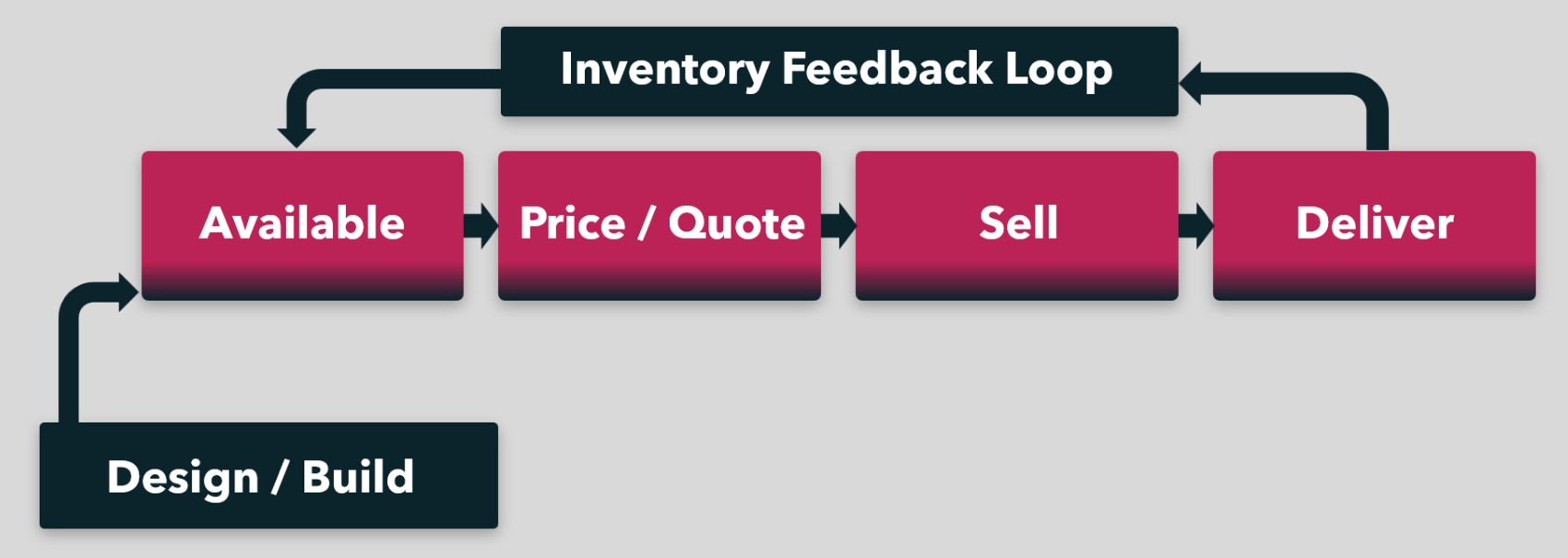
Most organizations have historically had to treat these as separate workflows owned by separate teams in separate tools. But treating the capacity lifecycle as one loop is what makes the data trustworthy enough to automate against, and it is the basis for a usable digital twin of the network.
The Benefit of Accurate Inventory Data
This is the premise Carma was built on: network and data center inventory, CRM, ordering, operations, and billing on one platform, so the record is right at the moment of capture.
Cost and revenue. Recover revenue lost to underbilling and missed customer requested dates. Stop paying to reconcile the same data over and over.
Customer experience. Sales and service delivery share one record, so what gets sold is what gets built. Service disruptions resolve faster, with fewer SLA breaches.
Scaling decisions. Quote and build against today’s real availability instead of a spreadsheet that was accurate last quarter.
Automation and AI. Closed loops and models act on data they can trust. Without it, they act faster on the wrong thing.
If you’re looking to start tackling these automation gaps, remember the data foundation has to come first.
Author Bio
Frank McDermott is a co-founder of Carma. He created Carma based on his first-hand experience in the industry—from the construction, operation, and management of fiber networks, data centers, and microwave & cellular networks, as well as consulting across the industry prior to founding Carma. Frank holds a Bachelor's from Georgetown, a Masters in Project Management from George Washington, and a Lean Six Sigma Black Belt from Villanova. Prior to entering the telecommunications industry, Frank served a distinguished career in the United States Air Force.